
Devotional Bible Study: A Complete Guide to Journaling, Prayer, Memorization & Reflection
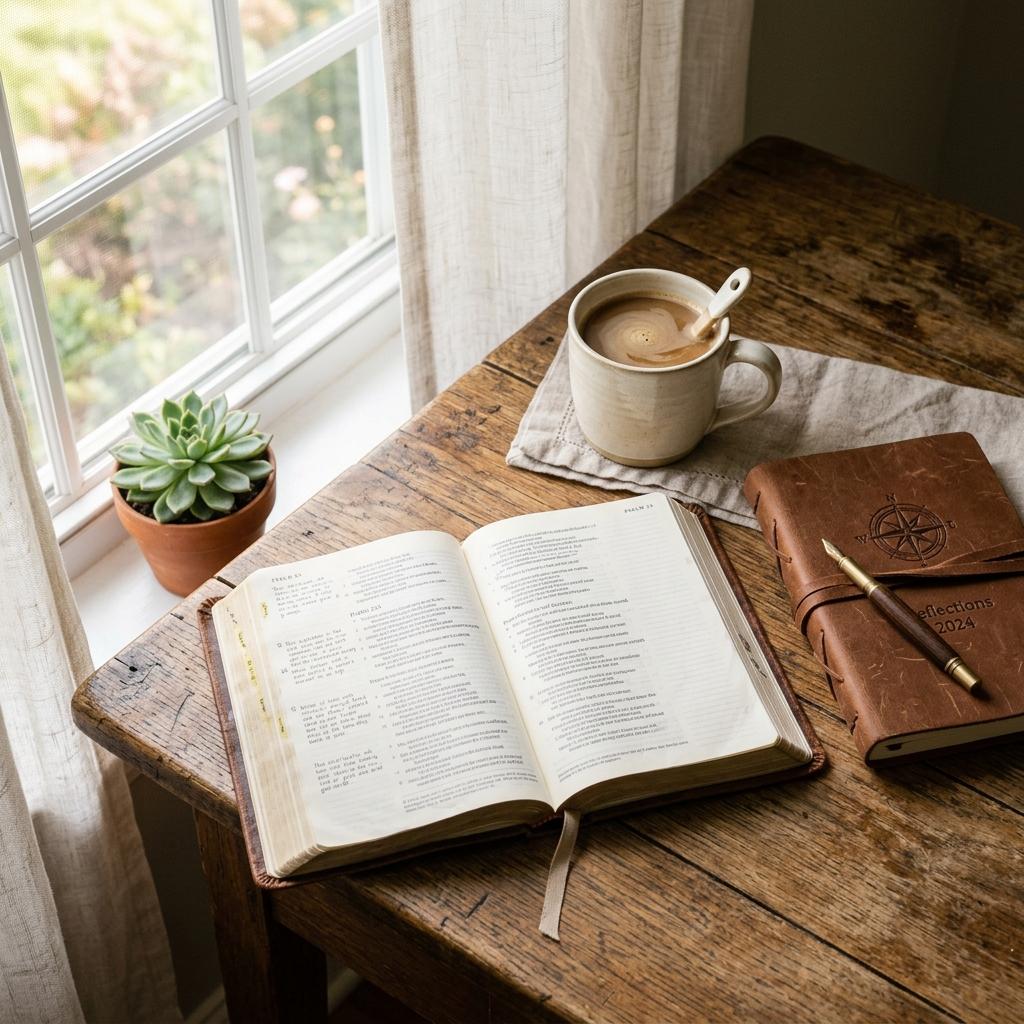
Devotional Bible study isn't about mastering Scripture—it's about encountering God through Scripture. While inductive study analyzes the text and word study unlocks meaning, devotional study transforms truth into lived experience. You sit with a passage, listen for God's voice, and let Scripture reshape your heart. This guide explores four interconnected practices that deepen personal spiritual engagement: journaling, prayer, memorization, and reflective questioning.
Each practice works with every translation—Geneva Bible, King James Version, ESV, NKJV, or NIV. Your choice matters less than your consistency. What matters most is showing up regularly, paying attention, and responding to what God reveals.
1. Journaling Techniques: Recording Your Scripture Encounter
Journaling externalizes your thinking. As you write observations, prayers, and insights, you clarify what God is saying and strengthen memory. Journaling transforms passive reading into active engagement.
Journaling Formats
SOAP Method (Simple, structured, popular with beginners):
- Scripture: Write out the passage
- Observation: Note what stands out
- Application: How does this change me?
- Prayer: Respond in writing to God
This format takes 15-20 minutes and works beautifully with any translation. The Geneva Bible's language rewards copying; the KJV's rhythm becomes memorable; modern translations clarify quickly.
Lectio Divina (Ancient monastic practice, contemplative):
- Lectio: Read slowly, notice words that grab you
- Meditatio: Reflect—why did that word resonate?
- Oratio: Pray your response
- Contemplatio: Rest in God's presence silently
This format intentionally slows you down. Allocate 30-45 minutes. Ideal for evening reflection or weekend depth.
Topical Journaling (Theme-focused, comprehensive):
Gather passages on one topic—prayer, faith, forgiveness—and journal responses to each. Build a personal theology through writing. This combines journaling with topical study and typically takes 1-2 hours.
Free-Form Journaling (No structure, purely personal):
Write whatever emerges—prayers, questions, insights, struggles. This is the most intimate format. No rules, no judgment. Many find this most spiritually transformative despite lacking structure.
Time-Based Workflows
| Time | Format | Approach |
|---|---|---|
| 10-15 min | SOAP (abbreviated) | Read, note one insight, one-sentence prayer |
| 20-30 min | SOAP (full) | Scripture + observation + application + prayer |
| 30-45 min | Lectio Divina | Slow reading, meditation, prayer, silence |
| 45-90 min | Topical or deep free-form | Multiple passages or extended reflection |
2. Prayer Integration: Praying the Scripture
Prayer and Scripture belong together. Praying the Scripture—speaking back to God what He's said—transforms reading into dialogue. You're not just receiving information; you're responding to God's voice.
Prayer Approaches with Scripture
- Conversational Prayer: Read a passage, then pray aloud or write your response. "Lord, You say I should forgive. I struggle with this person. Help me understand forgiveness the way You do." This honest, responsive prayer integrates Scripture with your real life.
- Intercession through Scripture: Use biblical language and promises when praying for others. Praying Scripture for someone carries the authority and power of God's Word. "Lord, grant him wisdom as You promised in James 1:5. Make his decisions align with Your will."
- Confession and Repentance: When Scripture convicts you, pray confession immediately. Don't skip past conviction. Linger, acknowledge, repent, receive forgiveness. This is prayer's cleansing power.
- Praise and Thanksgiving: Let Scripture prompt praise. "You are faithful. I see it in this passage. Thank You for Your faithfulness in my life." Praying praise roots gratitude in God's actual character, not just feelings.
- Petition and Supplication: Bring your requests to God using Scripture as a foundation. "You promise provision. I'm anxious about finances. Help me trust Your provision." Scripture-grounded prayer shapes requests toward God's will rather than selfish desire.
Integration Workflow
After journaling your application, spend 5-10 minutes in verbal or written prayer. Don't rush. Let the Scripture inform what you ask God. This cycle—reading, reflecting, journaling, praying—is the heartbeat of devotional practice.
3. Scripture Memorization: Storing God's Word in Your Heart
Memorization might feel outdated, but it serves a profound purpose: God's Word hidden in your heart becomes accessible throughout the day. A memorized verse surfaces when you need it most. You pray Scripture you've internalized. You recognize biblical truth when you encounter it.
Memorization Techniques
- Repetition Method (Simplest, most effective): Read the verse aloud 10-15 times daily. Day one: read. Day two-three: read and recite from memory. Day four-five: quote without looking. By day seven, most people retain it. The Geneva Bible and KJV are memorable partly due to their rhythmic language.
- Hand-Writing Method (Multi-sensory, slower): Write the verse 5-10 times daily. The physical act of writing engages muscle memory and concentration. Your hand "remembers" the passage. This takes longer but creates deeper retention.
- Narrative Connection (Story-based, for longer passages): Understand the narrative context of a passage. Memorize the story, then individual verses fit naturally within it. Story-based memorization feels less forced and more meaningful.
- Keyword Outline (Structural, for complex passages): For longer passages, identify the main point of each sentence. Memorize the outline first, then fill in details. This gives you structural understanding alongside word-for-word retention.
Realistic Schedules
| Commitment | Verses/Month | Method | Notes |
|---|---|---|---|
| Minimal | 1 verse | Repetition 5 min/day | One verse monthly, highly manageable |
| Moderate | 2-4 verses | Repetition + writing 10-15 min/day | One new verse every 1-2 weeks |
| Serious | 4-8 verses | Multiple methods, 20-30 min/day | One new passage weekly |
4. Reflection Questions: Deepening Your Insight
Well-crafted questions open Scripture in ways statements cannot. Questions create space for the Holy Spirit to teach, convict, encourage, and transform. Your own questions matter most—they're tailored to your life—but starter questions help when you're stuck.
Types of Reflection Questions
- Observation Questions (What do I see?):
What words or phrases stand out? What's repeated? What contrasts do I notice? Who is speaking, and to whom? - Interpretation Questions (What does this mean?):
Why did the author write this? What does this reveal about God's character? How does this fit the broader biblical narrative? What's the main point? - Application Questions (How does this change me?):
How does this truth challenge my assumptions? What would trusting this passage look like in my life today? What needs to change in my thinking or behavior? Who do I need to forgive, serve, or love because of this? - Theological Questions (What does this mean for my faith?):
How does this passage deepen my understanding of God? How does this connect to Jesus and the Gospel? What does this teach about salvation, redemption, or God's plan? - Personal Questions (How is God speaking to me?):
What is the Holy Spirit highlighting for me specifically? What am I resistant to in this passage, and why? What would obedience look like?
Journaling Your Questions: Write your questions as you read, then sit with them. Don't rush answers. Some questions take days or weeks to answer as life unfolds. This patient questioning deepens spiritual maturity more than hasty answers ever could.
Comparative Overview: The Four Practices Working Together
| Practice | Primary Benefit | Time Required | Best For | Spiritual Impact |
|---|---|---|---|---|
| Journaling | Clarity, memory, processing | 15-45 min | Capturing insights, tracking growth | Deepens reflection |
| Prayer | Dialogue, response, intimacy | 5-20 min | Relationship building, submission | Transforms knowledge into connection |
| Memorization | Accessibility, foundation, meditation | 10-15 min daily | Building spiritual reserves, meditation | Shapes thinking over time |
| Reflection Questions | Discovery, understanding, conviction | 5-15 min | Deeper insight, personal application | Invites Holy Spirit teaching |
The Ideal Integration: Read Scripture → journal observations → ask reflection questions → pray your response → memorize a key verse. This cycle, conducted over 45-90 minutes, creates comprehensive devotional engagement.
Building a Sustainable Devotional Rhythm
The best devotional practice is one you'll maintain. You don't need all four practices daily. Consider this rhythm:
- Daily (10-15 min): Read a passage, journal one observation, pray briefly.
- 3x Weekly (20-30 min): Add one reflection question and deeper journaling.
- 1x Weekly (45-90 min): Extended session including all four practices, or deep work on one practice.
- Ongoing: Memorize one verse monthly through daily repetition (5 min/day).
This rhythm is sustainable, flexible, and genuinely transformative. Adjust based on your season—busy seasons might focus on quick daily reading; slower seasons allow extended reflection.
Frequently Asked Questions
What translation should I use for devotional study?
Any translation works. The Geneva Bible and KJV offer beautiful, poetic language that lingers in memory. The ESV provides precision. The NKJV balances both. The NIV prioritizes clarity. Choose based on what draws you to sustained engagement. If you love language, choose Geneva or KJV. If you want clarity, choose ESV or NIV. If you want balance, choose NKJV. Switching translations periodically (different translation annually) refreshes your perspective.
How long until devotional study becomes a habit?
Typically 3-4 weeks of consistent practice. Start with just 10 minutes daily. Don't aim for perfection—consistency matters more than depth initially. After four weeks, the practice feels natural. After three months, you'll notice spiritual change. After a year, devotional study becomes part of your identity.
Should I journal every day?
Journaling 3-5 days weekly is often more sustainable than daily journaling. Quality matters more than quantity. A thoughtful 20-minute journal session twice weekly outweighs rushed 5-minute daily entries. Find your rhythm and stick with it.
Can I combine devotional study with other methods?
Absolutely. Many people journal using inductive observation methods, then add prayer and reflection questions. Word study of a key term deepens devotional engagement. Topical study provides devotional material. These methods aren't separate—they're complementary layers.
What if I miss days or fall off the routine?
This is normal. Don't restart from zero; just resume. Missing days doesn't erase previous growth. Seasons change—parenting young children, work intensity, grief, joy—all affect your capacity. Adjust expectations seasonally rather than abandoning the practice.
Conclusion: Your Spiritual Transformation Awaits
Devotional Bible study isn't complicated. It's simply showing up, paying attention, and responding to God. Journaling clarifies your thinking. Prayer deepens intimacy. Memorization makes Scripture accessible. Reflection questions invite the Holy Spirit's teaching.
Pick one practice to start—perhaps journaling if you're reflective, or prayer if you're relational. Master it for a month. Then add another. Within three months, you'll have a rich devotional rhythm tailored to your spiritual temperament.
The Geneva Bible, King James Version, ESV, NKJV, and NIV all support devotional growth. Choose the translation that makes you want to linger with Scripture. Return to our complete guide: Return to our complete guide to Bible study methods.
Related Study Guides
- Geneva Bible vs KJV: Full Comparison
Compare the translation philosophies and study features of these two historic versions.
- History of the Geneva Bible 1560
Discover the origins and impact of the Protestant masterpiece born in exile.
- King James Version: History & Translation
Explore the history of the 1611 authorized translation and its legacy.
- Why Pastors Prefer the Geneva Bible
Learn why many pastors choose the 1560 Geneva version for sermon preparation.