
How to Choose Between Bible Versions: A Practical Guide
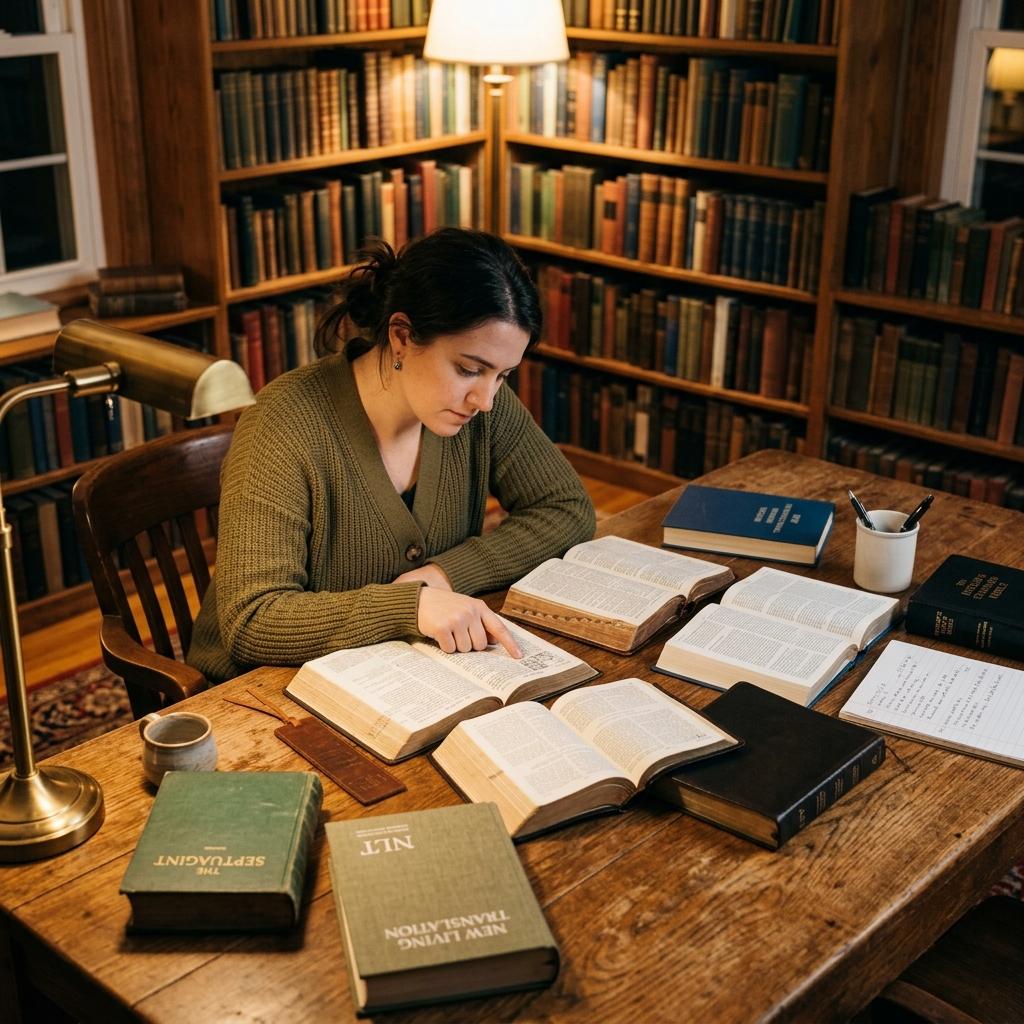
With dozens of English Bible translations available today, deciding which version to use for your study, devotional reading, or teaching can feel overwhelming. Some Bibles are highly literal, while others prioritize readability and flow.
Why Translations Differ Beyond Philosophy
Different translations also differ because:
The Decision Matrix: Choosing Your Bible Version
Now that you understand why translations differ, here's how to choose one.
Step 1: Identify Your Primary Use
First, determine what you'll primarily use the Bible for:
| Primary Use | Best Translation Characteristics |
|---|---|
| Devotional reading | Readable, accessible, engaging language |
| Sermon/teaching prep | Good study notes, theological consistency, either literal or good commentary |
| Personal study | Literal or balanced, good for word study, cross-references |
| Memorization | Beautiful, memorable language |
| First-time reading | Readable, accessible, not overwhelming |
| Original language study | Literal translation, ideally with interlinear option |
| Church worship | Familiar to your congregation, good for reading aloud |
This is your primary filter. If you primarily read devotionally, a highly literal translation might frustrate you. If you primarily study theology, a paraphrase won't serve you well.
Step 2: Assess Your Education Level
Honest self-assessment matters here:
- Advanced Biblical/Theological Education
- You understand concepts like textual criticism, hermeneutics, and original languages
- You can evaluate translation choices independently
- You benefit from literal translations with study apparatus
- Moderate Biblical Knowledge
- You've studied Scripture seriously but aren't formally trained
- You appreciate good study notes and theological depth
- You want accuracy without sacrificing readability
- Beginning/Casual Bible Reader
- You're relatively new to Scripture or read casually
- You value accessibility and readability
- You want to understand the overall message without wrestling with language
Don't use formal training as false humility. If you have advanced education, don't choose a "beginner" translation out of modesty—you'll be frustrated. Conversely, don't choose a highly technical translation if you're new to Scripture—it will discourage you.
Step 3: Determine Your Theological Tradition
Your faith tradition shapes what you value in a translation:
- Reformed/Calvinist Tradition
Values: Theological consistency, covenant theology, God's sovereignty emphasized
Best choices: ESV (many Reformed resources), NKJV, Geneva Bible, NASB - Evangelical/Non-denominational
Values: Contemporary language, balance between accuracy and readability, cultural relevance
Best choices: NIV, ESV, CSB, NLT - Traditional/Liturgical (Anglican, Presbyterian, etc.)
Values: Beautiful language, ecclesiastical authority, traditional phrasing
Best choices: KJV, NKJV, ESV, Prayer Book translation - Pentecostal/Charismatic
Values: Readability, immediacy, contemporary application
Best choices: NIV, NLT, CSB - Academic/Scholarly
Values: Manuscript accuracy, literal translation, access to variant readings
Best choices: NASB, ESV, original language resources
Again—this isn't rigid. But your theological tradition shapes what translation feels "right" to you. Using a translation that aligns with your tradition reduces friction.
Step 4: Consider Practical Factors
- Will you have study aids?
If yes: You can use more literal, demanding translations (NASB, KJV, NKJV)
If no: Choose something readable that stands alone (NIV, CSB, NLT) - Will others read from it?
If yes: Consider what your family, church, or study group uses (for ease of following along)
If no: Choose purely for your preference - Do you prefer reading apps or physical books?
Apps: Digital Bibles (YouVersion, Logos) offer multiple translations instantly
Physical books: Choose based on binding quality, font size, margin space - Budget considerations
Study Bibles run $30-100+
Basic Bibles are $15-40
Digital versions are often free or inexpensive
Consider quality/durability for long-term use
Step 5: Test Drive Before Committing
You don't have to buy a Bible to try a translation:
- YouVersion Bible App: Free, has dozens of translations
- Online Bible sites: BibleGateway.com offers most translations to read free
- Library: Many libraries have various Bible translations
- Church: Many churches have sample Bibles available
Test it by reading:
- A favorite passage you know well (you'll notice translation differences)
- An unfamiliar passage (you'll assess how readable it is new)
- A passage you find theologically complex (you'll see how the translation handles nuance)
Spend a week reading the translation. Does it feel natural? Does the language engage or frustrate you? Can you understand it without constant reference tools?
Quick Version Comparison Chart
| Translation | Type | Reading Level | Study Value | Tradition | Best For |
|---|---|---|---|---|---|
| NASB | Word-for-word | Advanced | Excellent | Academic | Detailed study |
| ESV | Balanced | Moderate | Very good | Reformed/Evangelical | Balanced choice |
| NIV | Balanced | Moderate | Good | Evangelical | General reading & study |
| KJV | Word-for-word | Advanced | Good (historic) | Traditional Protestant | Memorization, tradition |
| NKJV | Word-for-word | Moderate | Very good | Evangelical/Traditional | Balance of tradition & clarity |
| CSB | Balanced | Moderate | Very good | Evangelical | Contemporary accuracy |
| NLT | Thought-for-thought | Beginner | Fair | Evangelical | Accessibility, devotional |
| The Message | Paraphrase | Beginner | Fair | Evangelical/Contemporary | Devotional reading |
| Geneva Bible | Word-for-word | Advanced | Excellent (marginal notes) | Reformed | Theological study |
A Practical Decision Tree
Are you new to Bible reading?
Yes → NIV, NLT, or CSB
No → Continue
Will you primarily study or teach?
Yes → ESV, NASB, NKJV, or Geneva Bible
No → Continue
Do you prefer traditional or contemporary language?
Traditional → KJV, NKJV
Contemporary → NIV, ESV, CSB, NLT
Do you have formal theological education?
Yes → NASB, ESV, Geneva Bible, KJV
No → NIV, NKJV, CSB, ESV
What's your budget?
Limited → Digital version (free or $5)
Moderate → Basic Bible ($25-40)
Generous → Study Bible ($40-100+)
Make your choice and try it for 4 weeks before switching.
What Most Bible Readers Don't Know
You Don't Have to Choose Just One
Many Bible readers use multiple translations:
- A literal translation (ESV, NASB) for study
- A readable translation (NIV, CSB) for devotional reading
- A paraphrase (The Message, NLT) for fresh perspective
- A traditional translation (KJV, NKJV) for memorization
This isn't wasteful—it's wise. Different translations illuminate different aspects of Scripture.
Your Choice Can Change
The translation that served you well at one life stage might not serve you at another. A new Christian might start with the NLT, move to the ESV for deeper study, and eventually use the NASB for serious research. That's normal. Don't feel locked into your first choice forever.
No Translation Is Perfect
Every translation involves trade-offs. Every translation reflects some interpretive choices. The "perfect" translation doesn't exist because the goal of translation itself involves competing priorities (accuracy, readability, theological precision, cultural relevance). This is why comparing translations (by reading the same passage in 2-3 versions) is valuable. You see how translation choices affect meaning.
Frequently Asked Questions
Is the King James Version outdated?
Not entirely. The KJV reflects older manuscripts and archaic language, which creates limitations. However, its theological vocabulary is consistent, its language is memorable, and its history is profound. It's outdated for study purposes (newer translations reflect better manuscripts), but not outdated for devotional or literary purposes.
Should I use the version my church uses?
Generally yes, for congregational settings (so you can follow along easily). But for personal study, choose the version that serves your needs best. You can use one translation in church and another for personal study.
Are modern translations less accurate than the KJV?
No. Modern translations actually reflect better manuscript evidence. The KJV was based on limited medieval Greek texts (the Textus Receptus). Modern translations incorporate earlier, more reliable manuscripts discovered in the 20th century. Accuracy favors modern translations.
Can I mix translations when studying the same passage?
Absolutely. Comparing translations reveals how translation philosophy affects meaning. Reading John 3:16 in the NASB, ESV, and NIV shows different ways to balance accuracy and readability. This comparison deepens understanding.
What if I hate the translation I chose?
Switch. There's no penalty for changing. Try it for a few weeks, but if it genuinely frustrates you, move on. Bible reading should engage you, not frustrate you.
Conclusion: Trust Your Instinct (Informed Instinct)
Choosing a Bible translation shouldn't be complicated, but it also shouldn't be random. The best translation is one that matches your purpose, fits your education level, aligns with your tradition, and engages you.
Don't agonize over the perfect choice. Try one of the recommended versions for 4-6 weeks. You'll quickly learn whether it works for you.
And remember: the best Bible translation is the one you actually read. A perfect translation gathering dust on your shelf helps no one. An "imperfect" translation you read daily transforms your spiritual life.
Ready to try a different translation? Read the King James Version, Read the Geneva Bible, or explore other versions on Bible Search Hub to compare side-by-side and see how translation philosophy affects meaning.
Related Study Guides
- Geneva Bible vs KJV: Full Comparison
Compare the translation philosophies and study features of these two historic versions.
- History of the Geneva Bible 1560
Discover the origins and impact of the Protestant masterpiece born in exile.
- King James Version: History & Translation
Explore the history of the 1611 authorized translation and its legacy.
- Why Pastors Prefer the Geneva Bible
Learn why many pastors choose the 1560 Geneva version for sermon preparation.