
How to Do Word Study: A Beginner's Guide to Greek, Hebrew & Free Research Tools
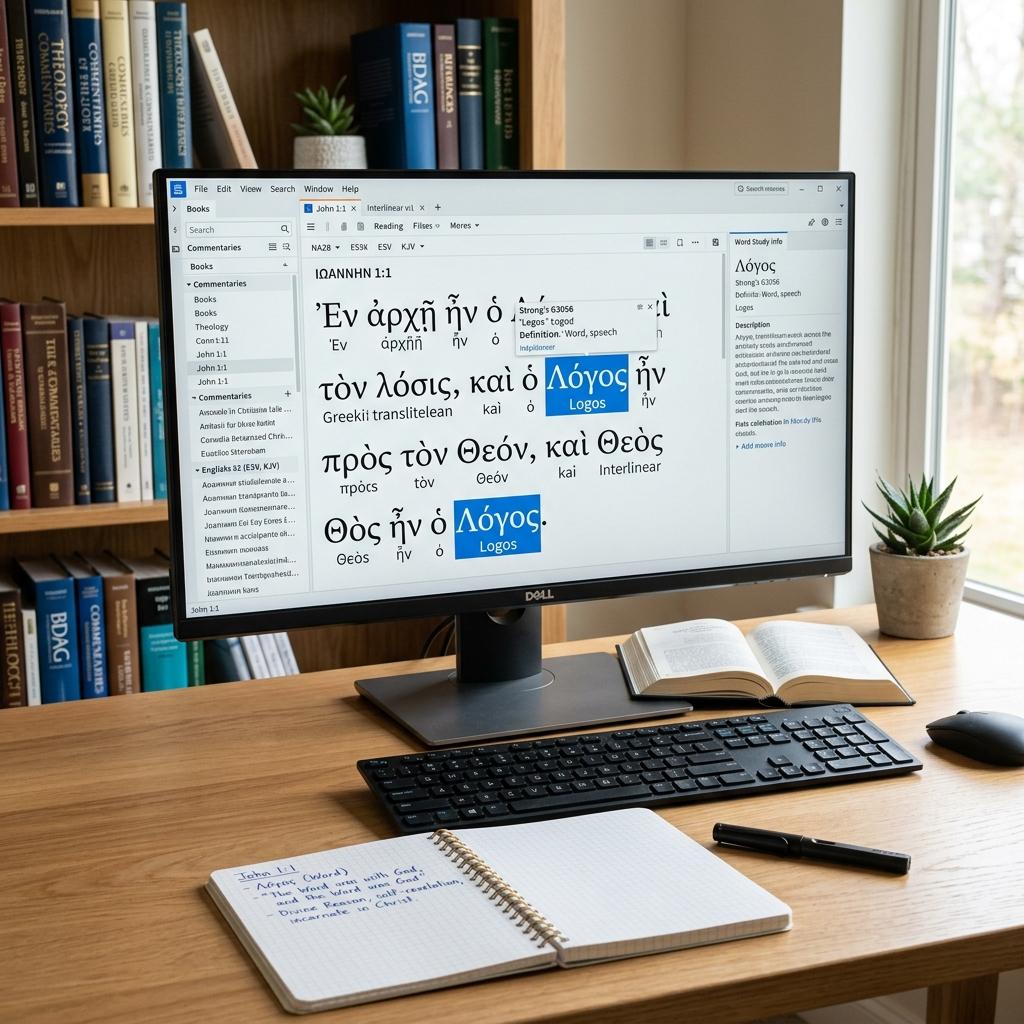
Word study intimidates many Christians. The assumption persists that unlocking original language meaning requires Greek and Hebrew fluency, seminary training, and expensive software. None of this is true. With free online tools and a systematic approach, anyone can conduct meaningful word studies that deepen Scripture understanding.
This guide demystifies word study. You'll learn why original language matters, how to navigate free lexicons, compare Bible translations strategically, and execute a complete word study research workflow—all without special training. Whether you're preparing a sermon, teaching a Bible study, or deepening personal Scripture engagement, word study becomes accessible and transformative.
1. Why Word Study Matters: Understanding the Original Language Connection
Every English Bible is a translation. A translator must choose how to render each Greek or Hebrew word into English. Different translators make different choices. The Geneva Bible might preserve a nuance the King James Version emphasizes differently. The ESV might opt for word-for-word precision where the NIV chooses clarity. None of these choices are wrong—they're different. Word study lets you see all of them.
The Translation Variability Principle
Consider the Greek word metanoia. Different English Bibles render it as "repentance" (KJV, NKJV), "turning" (some translations), or "change of mind" (literal). Each translation captures something true about the original, but none captures it completely. Word study lets you see the full picture—original meaning plus how it's been understood across centuries.
The Geneva Bible's marginal notes often record original language information. The King James Version's consistency (same Greek word typically gets the same English word) makes patterns visible. Modern translations prioritize different emphases. Word study isn't about finding the "right" translation—it's about understanding what the original author intended.
What Word Study Actually Involves
Word study is systematic exploration of a word's meaning, usage, and theological significance. You're asking: What did this word mean to the original readers? How did they use it? What emotional or cultural weight did it carry? Does this word appear elsewhere in Scripture, and how does context change its meaning?
This requires no Greek or Hebrew knowledge. You're not translating—you're researching what scholars have already translated and analyzed. Free tools do the heavy lifting.
2. Understanding the Basics: Greek, Hebrew & What You Actually Need
The New Testament was written in Koine Greek (the common Greek of the 1st century Mediterranean). The Old Testament was written primarily in Biblical Hebrew with some Aramaic. These original languages are removed from modern English by roughly 2,000 years of linguistic change.
Why Original Language Matters
A single Greek or Hebrew word might be rendered several different ways in English depending on context. The word agape (love) carries associations of divine, self-giving love. The word phileo (love) carries associations of affection and friendship. English has only one word, "love," but Greek distinguishes them. If you only read English, you miss this nuance.
The Geneva Bible and King James Version, being earlier translations created by scholars steeped in classical languages, often preserve these distinctions better than more recent paraphrastic translations. This doesn't make them superior—it makes them differently useful for word study.
You Don't Need to Know Greek or Hebrew
Here's the secret: word study doesn't require language ability. You need:
- A concordance or Bible search tool (to find all uses of a word)
- A lexicon (a dictionary explaining original word meanings)
- Critical thinking (to synthesize findings)
That's it. Free online tools provide all three. You're not learning languages—you're learning to navigate resources scholars have already created.
3. Navigating Lexicons & Free Tools: Your Research Toolkit
A lexicon is a specialized dictionary showing how a Greek or Hebrew word was used, what it meant, and how it evolved. Most lexicons include definitions, etymology, usage examples, semantic range, and theological significance.
Free Tools Available
| Tool | What It Offers | Best For |
|---|---|---|
| BibleHub.com | Multiple translations, Greek/Hebrew with lexicon links, commentaries | Quick word lookup, seeing Greek/Hebrew instantly |
| BlueLetterBible.org | Concordance, lexicons (KJV Strong's, enhanced lexicons), commentaries | Comprehensive study, detailed lexicon access |
| Logos Bible Software (Free) | Limited lexicons, some commentaries, basic tools | Introduction to premium software, foundational study |
| Strong's Concordance Online | Numbered indexing system linking English to Greek/Hebrew | Finding all uses of a word, cross-referencing |
Step-by-Step: Using BibleHub (Easiest Start)
- Go to BibleHub.com
- Search your verse (e.g., "Romans 3:23")
- Click the Greek/Hebrew word you want to study (interlinear section)
- The lexicon view shows definitions, usage, and variants
- Click "Concordance" to see every biblical use
- Compare how different translations render it
Step-by-Step: Using BlueLetterBible (More Comprehensive)
- Go to BlueLetterBible.org
- Enter your verse
- Switch to "Interlinear" view to see original language
- Click any Greek/Hebrew word
- Choose lexicon (KJV Strong's or enhanced lexicons)
- Read definition and scroll through usage examples
- Use "Concordance" tab to find all biblical occurrences
- Note patterns across usages
4. Comparing Translations: Revealing Nuance Through Different Renderings
One of word study's greatest values: seeing how different translators rendered the same original word. BibleHub shows this beautifully—you see your verse in 10+ English translations simultaneously.
Translation Comparison Technique
Choose a key word in your verse. Check how different translations render it:
- Geneva Bible: Often interpretive, preserves theological nuance
- King James Version: Consistent (same Greek word often = same English word), rhythmic
- ESV: Word-for-word, precise, scholarly
- NKJV: Balances word-for-word and readability
- NIV: Thought-for-thought, accessible, clear
- NASB: Extremely literal, sometimes awkward English
- The Message: Paraphrastic, focuses on meaning and application
When they differ, you've found something worth exploring. Why did one translator choose "repentance" while another chose "turning"? What does each emphasis reveal?
Example: The Word "Metanoia" (Repentance)
Let's trace how different translations render Greek metanoia:
- KJV: "repentance" (strong term, emphasizing moral turning)
- ESV: "repentance" (word-for-word match to Greek sense)
- NIV: "turning around" (clarifies the physical/conceptual image)
- The Message: "turn around and walk in God's light" (interpretive, applicational)
Each is correct. Together, they show that metanoia isn't just feeling sorry—it's fundamentally changing direction. The Geneva Bible's marginal notes often explain this: "turning from sin to God."
5. The Complete Word Study Workflow: From Question to Insight
Here's how to execute a thorough word study using free tools:
Time-Based Comparison
| Depth | Time | Method | Suitable For |
|---|---|---|---|
| Quick | 30 min | BibleHub lookup, lexicon read, translation comparison | Personal study, daily devotion |
| Standard | 60 min | BlueLetterBible research, multiple uses, pattern analysis | Small group teaching, deeper personal study |
| Deep | 2-3 hours | Multiple lexicons, extensive concordance, theological research, document creation | Sermon preparation, in-depth teaching |
Frequently Asked Questions
Do I really need to know Greek or Hebrew?
No. You're not translating—you're researching. Free tools present the work scholars have already done. Reading a lexicon entry requires no language knowledge, just English reading comprehension.
Which free tool should I start with?
BibleHub.com is simplest. Go there, search a verse, click the Greek/Hebrew word in the interlinear, and read the popup. That's 80% of what you need. Graduate to BlueLetterBible when you want deeper research.
How often should I do word studies?
If you're preaching/teaching: 1-2 word studies per sermon/lesson, using the 1-2 hour workflow. If you're in personal study: 1-2 word studies per week, using the 30-minute workflow. Consistency matters more than frequency.
Why does my translation differ from others on a particular word?
Translators make different choices based on emphasis. The Geneva Bible and KJV often preserve nuance; modern translations often prioritize clarity. Neither is wrong—they're different. Word study lets you see what each translator prioritized.
Can I combine word study with other Bible study methods?
Absolutely. Inductive observation identifies words worth studying. Word study deepens what inductive study found. Topical study benefits from word study (seeing how a word's meaning develops across Scripture). Devotional study applies word study insights personally. These methods enhance each other.
What if I find different information in different lexicons?
This is normal. Lexicons can disagree about nuance or emphasis. When they differ, you've found something worth thinking through. Read multiple sources, then synthesize your own understanding. This is the real work of word study.
Conclusion: Your First Word Study Awaits
Word study is accessible. You don't need special training, expensive software, or language expertise. You need a method, free tools, and 30 minutes to an hour.
Start today. Pick a verse that puzzles you. Go to BibleHub.com. Click one Greek or Hebrew word. Read the lexicon popup. Compare how different translations render it. Notice what you learn. That's word study. That's how you unlock deeper Scripture understanding.
Ready to deepen your research skills? Return to our complete guide to Bible study methods to integrate word study with inductive, topical, and devotional approaches. The Geneva Bible and King James Version become even more valuable once you understand how their translation choices preserve original language nuance. Your next Scripture discovery is one word study away.
Related Study Guides
- Geneva Bible vs KJV: Full Comparison
Compare the translation philosophies and study features of these two historic versions.
- History of the Geneva Bible 1560
Discover the origins and impact of the Protestant masterpiece born in exile.
- King James Version: History & Translation
Explore the history of the 1611 authorized translation and its legacy.
- Why Pastors Prefer the Geneva Bible
Learn why many pastors choose the 1560 Geneva version for sermon preparation.