
Advanced Bible Study Techniques: Synthesis, Specialized Methods & Going Deeper
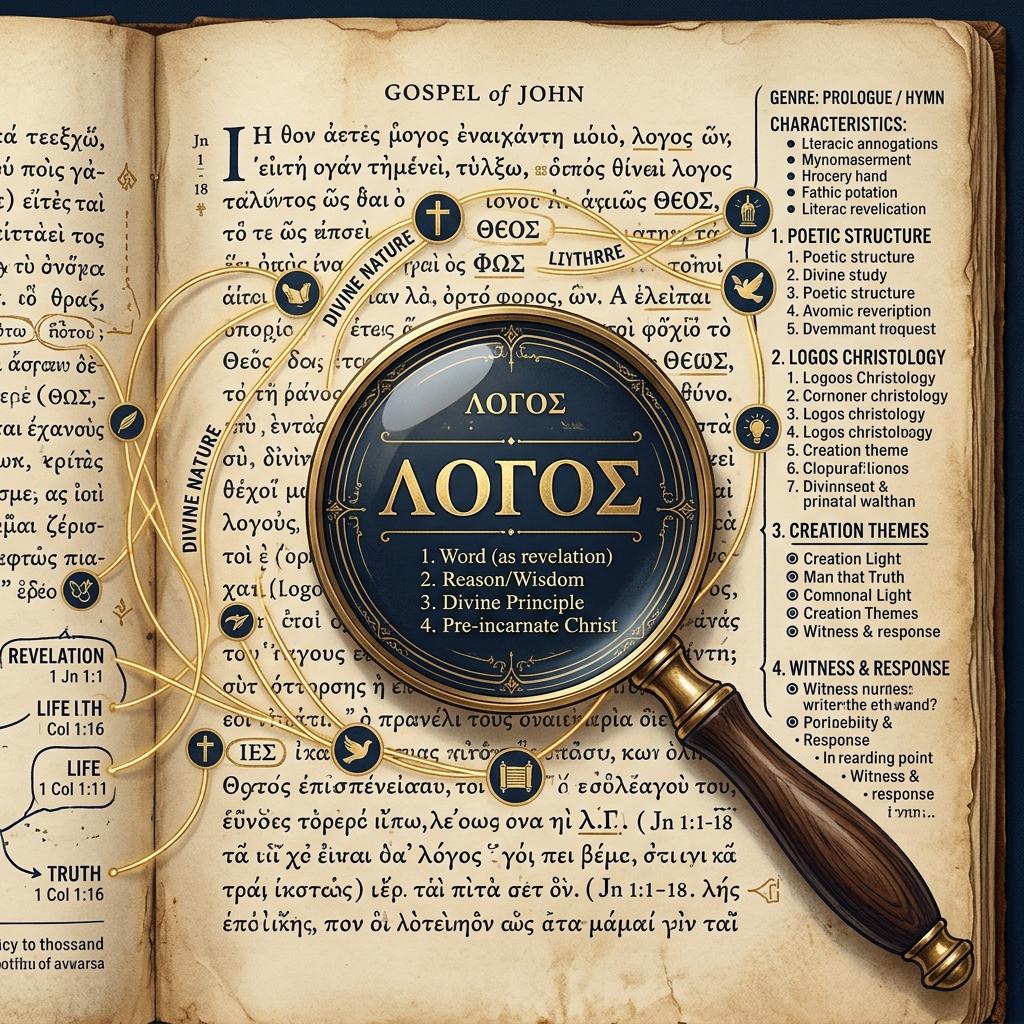
Once you've mastered the foundational Bible study methods—inductive study, word study, topical investigation, and devotional practice—the natural progression is to integrate these approaches and develop specialized analytical skills. Advanced Bible study techniques elevate your research beyond surface-level understanding to theological depth, cultural awareness, and methodological sophistication.
This guide teaches you how to synthesize multiple study methods simultaneously, employ specialized techniques like genre analysis and cultural-historical research, and use free research tools strategically to answer complex Scripture questions. Whether you're preparing teaching material, wrestling with difficult theological passages, or pursuing personal mastery of the biblical text, these techniques will help you move from competent to expert-level research.
Key Techniques Covered:
- Method synthesis and integration
- Genre-specific analysis strategies
- Cultural and historical research foundations
- Advanced free tool techniques
- Building a personal advanced study workflow
Part 1: Synthesis—Combining Methods for Deeper Understanding
Understanding Method Integration
Synthesis means deliberately combining two or more study methods to answer a single question or understand a passage comprehensively. Rather than studying a passage through only inductive observation or only word study, you layer approaches to create fuller understanding.
Why Synthesis Matters:A complex passage like Romans 5:12-21 (Paul's teaching on sin, grace, and justification) requires multiple lenses. Inductive study reveals the structure and logical flow. Word study on "justification" (dikaiosyne, dikaioo) uncovers Greek legal concepts. Topical study traces the theme of justification throughout Paul's epistles. Devotional reflection personalizes the implications. Synthesizing all four creates comprehensive understanding that a single method cannot achieve.
Synthesis Pattern: The Integrated Study Framework
Step 1: Observation Layer (Inductive)
Begin with inductive observation to identify:
- Structural patterns (parallelism, chiasm, repetition)
- Genre markers (narrative, epistle, prophecy, wisdom)
- Literary transitions and logical flow
- Key repeated terms and concepts
For Romans 5:12-21, observe: Paul uses "just as... so also" (structure), employs repeated contrasts (sin vs. grace, death vs. life, disobedience vs. obedience), and builds a logical argument.
Step 2: Word Study Layer (Lexical)
Identify 5-7 key terms requiring deeper investigation:
- dikaiosyne (righteousness/justification)
- charis (grace)
- parabasis (transgression)
- thanatos (death)
- basileia (kingdom/reign)
For each term, use BibleHub Lexicon to investigate:
- Greek etymology and root meanings
- How the word appears elsewhere in Paul's writings
- Translation variations across Geneva Bible, KJV, ESV
- Theological weight in different contexts
Step 3: Topical Layer (Thematic)
Using BlueLetterBible's topical index, trace how this passage's themes appear throughout Scripture:
- Justification in the Old Testament (covenantal righteousness)
- Justification in the Gospels (Jesus's teaching on righteousness)
- Justification in Paul's other epistles (Galatians, Philippians)
- Justification in James (faith and works)
This reveals whether Paul's Romans teaching stands alone or develops themes already present in the canon.
Step 4: Devotional Layer (Personal Application)
With structural, lexical, and thematic understanding in place, reflect:
- How does understanding justification's historical-theological development change my personal appropriation of grace?
- What practices reinforce living under grace rather than law-obedience?
- How does this passage address my specific struggle with performance or worthiness?
Timeline for Integrated Synthesis:
- Quick synthesis (1 hour): Observation + one word study term + basic topical connection + brief reflection.
- Standard synthesis (2 hours): Observation + 3 key word studies + extended topical tracing + documented reflection.
- Deep synthesis (3-4 hours): Full observation analysis + 5-7 word studies + comprehensive topical research across all testaments + integration with personal theology.
Synthesis Tools Workflow (Free Only)
BibleHub.com (Lexicon, Commentaries, Cross-references)
- Go to Romans 5:12 (your passage).
- Click "Lexicon" for key Greek words.
- Note all occurrences and translation variations.
- Compare theological comments from multiple commentaries.
BlueLetterBible.org (Topical Index, Tool Panel)
- Search topical index for "justification".
- View all Scripture references organized by testament.
- Use "Create a Study" to compile a custom topical study.
- Export results for your research file.
Bible.com (YouVersion)
- Read passage in multiple translations (Geneva Bible, KJV, ESV, NKJV, NIV).
- Note translation differences that highlight theological nuances.
- Compare verse-by-verse commentary from various sources.
- Save annotations to your personal library.
Part 2: Specialized Techniques—Genre Analysis & Cultural Research
Genre-Specific Analysis Strategies
Different biblical genres require specialized analytical approaches. A wisdom literature passage (Proverbs), a prophetic oracle (Isaiah), a Gospel narrative (Mark), and an epistle (Romans) demand different interpretive lenses.
Narrative Analysis (Gospels & OT Historical Books)
Key Questions:
- Who are the characters, and how do they develop?
- What is the setting, and how does it shape action?
- What is the narrative arc (conflict, climax, resolution)?
- What does the narrator emphasize through repetition, placement, or dialogue?
- What is the theological point through the story rather than through direct teaching?
Example: Mark 4:35-41 (Jesus Calming the Storm)
- Characters: Jesus (teacher/Lord), disciples (fearful/doubting), storm (antagonist).
- Setting: Sea of Galilee, evening, transition from teaching to miracle.
- Arc: Disciples in distress → Jesus awakens → Jesus rebukes storm → Resolution and revelation.
- Emphasis: Jesus's authority over creation; disciples' faith journey; repeated contrast between fear and faith.
- Theological point: Trust in Jesus supersedes natural fear; who is this that even wind and sea obey?
Specialized genre questions: How does Mark's account differ from Matthew's or Luke's telling? (Comparison reveals Mark's emphasis). What OT background informs this story? (Psalm 89:8-9, Job 38, storm imagery in prophet literature). How does this story function in Mark's narrative of progressive revelation? (Coming after teaching parables).
Poetic & Wisdom Literature Analysis (Psalms, Proverbs, Job)
Key Questions:
- What is the poetic structure (parallelism, acrostic, meter)?
- What imagery and metaphors dominate?
- What is the emotional movement or progression?
- What wisdom principle or truth is conveyed?
- What cultural context informs the figures of speech?
Example: Psalm 23
- Structure: Five stanzas with progression from pastoral care to temple security.
- Parallelism: Antithetic (contrasting), synonymous (reinforcing), synthetic (advancing).
- Imagery: Shepherd/sheep, green pastures/still waters, dark valley/table, anointing/overflowing cup.
- Emotional arc: Confidence → darker passage → renewed assurance → forward hope.
- Cultural context: Palestinian shepherding practices, ancient near eastern kingship, Hebrew temple ritual.
Specialized genre questions: How does shepherd metaphor function throughout Scripture? (Psalm 80, John 10, 1 Peter 5). What historical situation might this psalm address? (Threat, displacement, seeking refuge). How does personal experience of danger and protection authenticate the psalm's confidence?
Epistle Analysis (Paul, James, Peter, John)
Key Questions:
- What historical situation prompted this letter?
- What is the rhetorical strategy (argument structure)?
- What theological themes recur?
- How does this epistle relate to the author's other writings?
- What practical imperatives follow from theological statements?
Example: Romans (Chapter-by-chapter analysis)
Historical situation: Paul writes to a church composed of Jewish and Gentile believers with potential tension; Paul plans to visit and hopes for partnership in mission to Spain.
- Chapters 1-3: Problem (universal sinfulness)
- Chapters 4-5: Solution (justification by faith)
- Chapters 6-8: Sanctification (living out justification)
- Chapters 9-11: Theodicy (how does justification relate to Israel's rejection?)
- Chapters 12-16: Practical application (Christian living and church unity)
Specialized genre questions: How does Romans defend Paul's understanding of justification against Jewish objections? (Chapters 3-4 address Torah and Abraham). How does Romans address the Gentile-Jewish tension specifically? (Chapters 14-15 discuss eating practices and holy days). What is Paul's most fundamental assertion about identity for both groups? (United in Christ, no ethnic hierarchy, Chapters 10-11).
Cultural & Historical Context Research
Advanced study incorporates cultural and historical background that illuminates the text's original meaning.
Key Research Categories:
- Geographical Context: Where did this occur? How did the setting shape the action? (Bethlehem, Jerusalem, Samaria, Corinth).
- Cultural Practices: What customs, rituals, or social norms inform this passage? (Jewish purity laws, patronage systems, honor-shame culture, family structures).
- Religious Background: What Jewish, Roman, or Near Eastern religious concepts informed the original audience? (Temple sacrifice theology, Messianic expectation, pagan philosophical ideas, covenant theology).
- Political Context: What was happening politically that shaped this text? (Roman occupation, Herod's rule, temple politics, Emperor worship).
Free Research Tools for Historical Context:
- BibleHub.com Commentary Section: Each verse includes commentaries noting historical and cultural background.
- BlueLetterBible.org Lexicon Notes: Word entries include historical usage and cultural context.
- Bible Gateway (Bible.com) Study Notes: Most translations include cultural footnotes.
- Wikipedia for Biblical Topics: Reliable overview of historical background (Herod, Roman occupation, Jewish sects, temple practices).
- Public Domain Bible Commentaries: Matthew Henry, Ellicott's, Albert Barnes (available free online) include extensive historical notes.
Part 3: Building Your Advanced Study Workflow
Develop a consistent template for advanced investigations. This standard structure allows you to conduct research systematically without missing elements, compare studies, and build a personal knowledge base.
Creating a Personal Advanced Study Template
PASSAGE: [Reference]
INITIAL QUESTION: [What prompted this study?]

SECTION A: OBSERVATION (Inductive)
- Literary structure and patterns
- Genre identification
- Key repeated terms
- Logical flow and transitions
- Significant word placement/emphasis

SECTION B: WORD STUDY (Lexical)
- Key term #1: [definition, etymology, usage patterns]
- Key term #2: [definition, etymology, usage patterns]
- Key term #3: [definition, etymology, usage patterns]
- Translation comparison (Geneva Bible, KJV, ESV, NKJV, NIV)

SECTION C: TOPICAL RESEARCH (Thematic)
- Theme appearance in OT
- Theme appearance in Gospels
- Theme appearance in Paul's epistles
- Theme appearance in other NT writings
- Development or consistency across canon

SECTION D: SPECIALIZED ANALYSIS
- Genre-specific questions answered
- Cultural/historical context relevant to this passage
- Connection to immediate literary context
- Theological significance for original audience

SECTION E: DEVOTIONAL INTEGRATION
- Personal application
- Confession or repentance needed
- Behavioral change implications
- Prayer response

SECTION F: SOURCES USED
- BibleHub searches conducted
- BlueLetterBible resources consulted
- Bible.com translation comparisons
- External commentaries referenced
Time Management for Advanced Studies
Sustainable Advanced Study Rhythms:
- Weekly Deep Study (3-4 hours): One passage per week with full advanced analysis. Ideal for sermon preparation, teaching preparation, or personal spiritual depth.
- Monthly Themed Deep Study (6-8 hours): One theological theme with multiple passages, topical research, and integration across Scripture. Ideal for personal theology development or writing projects.
- Quarterly Specialization (12+ hours): Deep dive into one biblical book or theological concept with all specialized techniques, creating personal commentary.
Workflow Time Allocation: Observation/Structure analysis: 25% | Word study: 25% | Topical research: 25% | Specialized analysis: 15% | Devotional integration: 10%. (For a 3-hour study: 45 min observation, 45 min word study, 45 min topical, 27 min specialized, 18 min devotional).
Part 4: Advanced Study Techniques Integrated with Foundational Methods
Advanced techniques are not a replacement for foundational methods, but rather their culmination:
- Inductive Study Foundation: Inductive study foundation provides observation, interpretation, and application. Advanced integration builds on this by adding genre analysis to answer questions the inductive method alone cannot address.
- Word Study Foundation: Word study methodology isolates and defines terms. Advanced integration expands this into systematic lexical analysis of 5-7 terms, comparing translation choices and tracking argument progression.
- Topical Study Foundation: Topical study approachescollect verses on a theme. Advanced integration uses topical tracing to identify doctrinal development across testaments and synthesizes how a passage fits the canon's theological arc.
- Devotional Practice Foundation: Devotional Bible Study practices ground study in personal response. Advanced integration ensures your devotional application is rooted in actual, contextually accurate meaning rather than subjective interpretation.
Frequently Asked Questions
Is advanced study only for scholars and pastors?
No. Any mature believer can develop advanced study skills. The techniques use the same free tools available to everyone; the difference is intentional methodology and sustained practice.
How long does it take to become proficient at advanced synthesis?
Foundational skill develops in 3-4 months of weekly practice. True proficiency—where synthesis feels natural and patterns recognize themselves—typically requires 1-2 years of consistent study.
Can I use advanced techniques on every passage I study?
Advanced synthesis is best reserved for passages you teach, passages that perplex you, passages central to your theological questions, or passages that recur in your spiritual journey. Match technique depth to research need.
What if I don't read Greek or Hebrew?
Free tools like BibleHub and BlueLetterBible provide lexical information translated into English, cultural notes, and scholarly analysis. You're investigating how scholars understand the original languages, not learning the languages themselves.
How do I know if my advanced study interpretation is correct?
Compare your findings with published commentaries (especially those with historical-cultural expertise). Agreement across multiple sources validates your analysis. Disagreement signals you should investigate why they differ.
Can advanced synthesis contradict my devotional understanding?
Sometimes yes, and that's healthy. Historical-cultural research might reveal that a passage doesn't mean what popular devotional application suggests. Allow historical understanding to refine and ground devotional practice in actual meaning.
Conclusion: Moving from Competent to Expert
Advanced Bible study techniques represent a maturation from basic methodology to sophisticated integration. You're no longer asking "What does this passage say?" (inductive), "What does this word mean?" (word study), or "Where else does this theme appear?" (topical). You're asking: "How does this passage's complete meaning—structural, lexical, thematic, cultural, and genre-informed—shape my understanding of God and my life?"
This is expert-level study. It's sustained, intentional, integrated, and deeply rewarding. Whether you study for teaching, personal theology development, or spiritual transformation, these advanced techniques unlock dimensions of Scripture that foundational methods alone cannot reach.
Begin with one advanced study this month. Choose a passage that has puzzled you or a text central to your current faith questions. Use the integrated framework. Notice what integration reveals that isolation could not. If you want to check how these methods relate to historical study aids, compare the Geneva Bible and KJV or understand the history behind the Geneva Bible 1560 to see how historical commentaries were structured.
Related Study Guides
- Bible Study Methods: Complete Guide
Master four powerful Bible study methods—inductive, word study, topical & devotional.
- Bible Character Study Guide
Trace biblical figures and their spiritual transformation using timelines.
- Inductive Bible Study Guide
Study passages deeply using observation, interpretation, and application.
- How to Do Word Study Guide
Learn word study step-by-step using free tools like BibleHub and BlueLetterBible.