
Bible Character Study: Complete Guide to Tracing Biblical Figures & Character Development
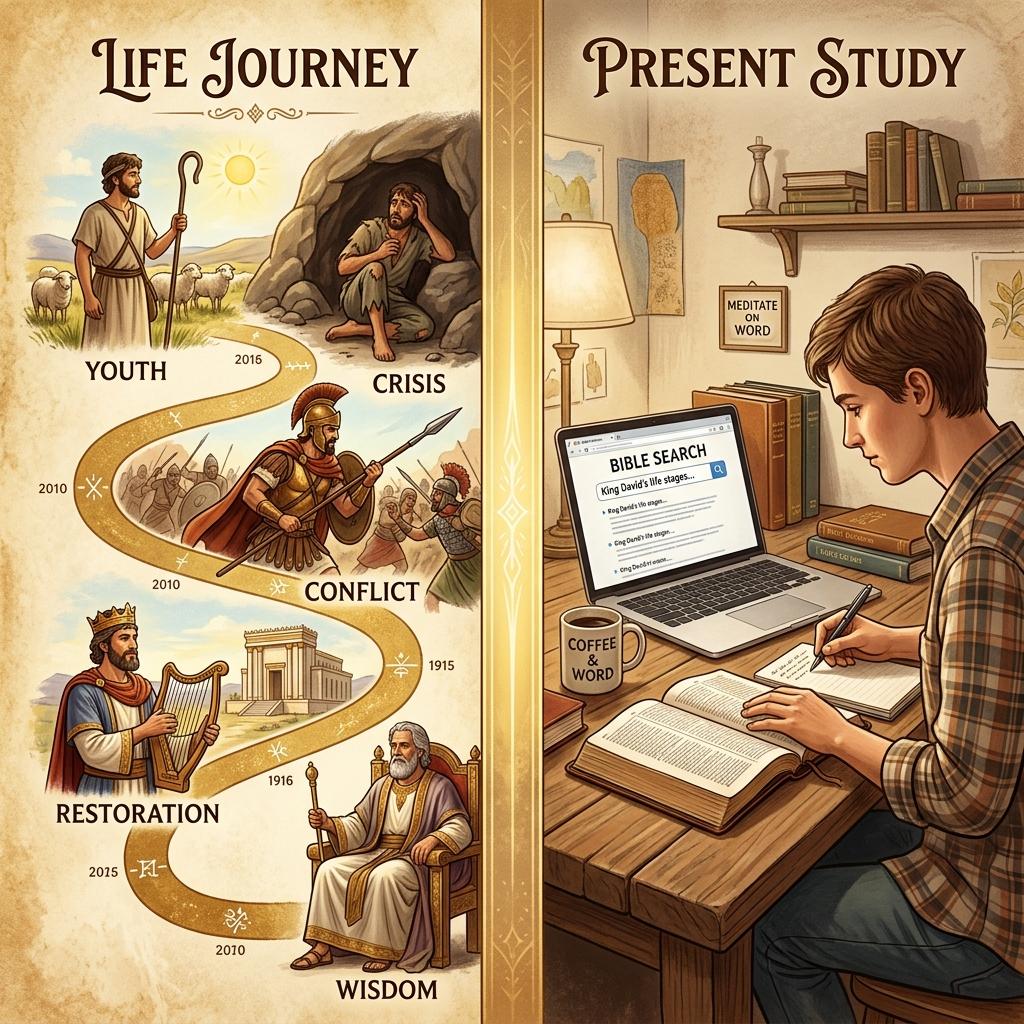
Character study is one of the most rewarding Bible study methods because it transforms Scripture from a collection of passages into a tapestry of interconnected lives. When you trace a biblical character from their first appearance through their entire journey, you discover patterns of faith, failure, restoration, and transformation that illuminate not just their story but your own spiritual journey.
Unlike other Bible study methods, which focus on passages, doctrines, or themes, character study focuses on people—real individuals whose lives demonstrate biblical principles in action. You follow David from shepherd boy to king, watch Peter's journey from impulsive disciple to apostolic leader, or trace Hannah's path from despair to motherhood and spiritual influence.
Character study is particularly valuable because it answers the question: "How did this person grow spiritually?" By examining how God worked in biblical figures' lives across decades and through various circumstances, you gain practical insight into how God works in your own life. This guide walks you through the complete process of character study, from selecting a character to analyzing their spiritual transformation.
Character Study and Its Place Among Bible Study Methods
Character study complements and integrates with other Bible study approaches. Understanding how character study fits alongside these methods will enhance your overall Bible study strategy.
Character Study vs. Inductive Study
Inductive studyexamines a single passage deeply—analyzing what it says, what it means, and how to apply it. Character study uses a similar analytical process but applies it across multiple passages spanning a character's entire biblical life.
The relationship:Inductive study provides the analytical tools; character study applies those tools to a broader scope. You might use inductive study to analyze a specific passage about Peter's restoration (John 21), then expand to character study to understand his entire transformation from denial to leadership.
Character Study vs. Topical Study
Topical studytraces a theme (grace, faith, redemption) throughout Scripture. Character study traces a person throughout Scripture. While topical study might examine "what does the Bible teach about faith?", character study asks "how did this character demonstrate faith?"
The relationship: Both methods gather passages across Scripture. Character study often reveals how a specific character embodies or struggles with the themes explored in topical study.
Character Study vs. Word Study
Word study examines the meaning, development, and usage of specific biblical words. Character study examines the meaning, development, and transformation of specific biblical people.
The relationship:Character study may include word study when examining how a character's understanding of a specific word (like "faith" or "love") deepens over time. The two methods naturally overlap when you want to understand both what a character believed and why.
Character Study vs. Devotional Study
Devotional study focuses on personal spiritual response and transformation. Character study focuses on understanding how Scripture reveals character development and spiritual growth.
The relationship:Character study feeds devotional study. By understanding Peter's journey toward faith and leadership, you can reflect devotionally on your own journey and how God is developing you similarly.
Finding and Gathering Character Passages
Before you can analyze a character, you need to find every passage where they appear. This systematic approach ensures you don't miss crucial development stages in their story.
Selecting Your Character
Choose a character who genuinely interests you. The time investment in character study is significant enough that studying someone who fascinates you makes the work enjoyable rather than obligatory.
Good character study subjects: David, Peter, Paul, Abraham, Moses, Ruth, Esther, Hannah, Timothy, Jonah, Mary Magdalene, Priscilla, Joseph.
Locating All Passages: The Concordance Method
The most comprehensive approach uses a Bible concordance to find every mention of your character.
Steps for BibleHub (free):
- Go to BibleHub.com and click "Search".
- Enter the character's name (e.g., "Peter" or "David").
- Review the complete results list—BibleHub shows every verse mentioning that name.
- Copy all references into a document or spreadsheet, organized by biblical book.
Steps for BlueLetterBible (more detailed):
- Go to BlueLetterBible.org and use the search bar.
- Enter the character's name.
- Use the "Tools" section to see cross-references and related passages.
- Pay attention to passages using alternate names (Simon for Peter, Saul for Paul).
Handling Characters with Multiple Names
Some characters appear under different names at different life stages. Paul was called Saul before his conversion. Simon Peter was called by both names. Ruth was also called Naomi's daughter. When searching, you'll need to search for both names.
Characters with name changes:
- Saul/Paul
- Simon/Peter
- Abram/Abraham
- Sarai/Sarah
- Jacob/Israel
Organizing Your Passages
As you gather passages, organize them chronologically and by context:
| Passage | Context | Life Stage | Key Development |
|---|---|---|---|
| 1 Samuel 16:1-13 | Called as shepherd | Youth | God's selection |
| 1 Samuel 17 | Goliath encounter | Youth | Courage emerges |
| 1 Samuel 24:1-22 | Spares Saul's life | Fugitive | Mercy and restraint |
| 2 Samuel 11-12 | Bathsheba & Nathan | Kingship | Failure and repentance |
| Psalm 23, 42, 139 | Psalms attributed to David | Kingship | Spiritual maturity |
Analyzing Character Development and Transformation
Raw passages become meaningful when you analyze how the character develops. This analysis reveals spiritual patterns that apply to your own growth.
Identifying Key Life Stages
Most biblical characters pass through distinct phases:
- Origin/Background: Where they came from, their initial circumstances.
- Call/Crisis: The moment God called them or a major turning point.
- Testing/Development: Extended period of growth through challenges.
- Failure/Refinement: Where they struggled and learned from mistakes.
- Maturity/Influence: Their greatest spiritual impact.
- Legacy/Conclusion: How their life ended and what remained.
Example - Peter's progression:
- Origin: Fisherman, impulsive personality.
- Call: "Follow me" (Matthew 4:18-20).
- Testing: Walking on water, confessing Jesus, defending Jesus.
- Failure: Denying Jesus three times (John 13).
- Restoration: Jesus's restoration conversation (John 21).
- Maturity: Leadership in Acts, mentoring young believers.
- Legacy: Epistles and established church foundation.
Examining Character Traits
Track how specific traits develop or transform:
Peter's trait development:
- Impulsiveness: Decreases as maturity increases (compare early gospels to 1 Peter).
- Courage: Grows significantly post-resurrection (compare pre-crucifixion fear to Acts boldness).
- Spiritual understanding: Deepens from literal thinking to pastoral wisdom.
Tools, Workflows, and Study Approaches
The tools available for character study range from free digital concordances to comprehensive biblical software. Choose your tools based on the depth you want to achieve.
Free Tools Comparison
| Tool | Best For | Strengths | Learning Curve |
|---|---|---|---|
| BibleHub.com | Concordance searches, translation comparison | Fast, comprehensive results, multiple translations | Very low |
| BlueLetterBible.org | Detailed context, cross-references | Interlinear capability, comprehensive tools, Strong's integration | Low-moderate |
| Logos Free | Structured topical browsing | Professional resources, intuitive interface | Low |
| Bible.com (YouVersion) | Mobile study, highlighting notes | App-based, community notes, highlights | Very low |
| Strong's Online | Original language detail | Authoritative Greek/Hebrew lexicon | Moderate |
For character study specifically: Start with BibleHub for comprehensive passage gathering, then use BlueLetterBible for deeper context on key passages.
Three Character Study Workflows
Quick Character Study (45-60 minutes)
- Select character and gather all passages (20 min).
- Read through passages quickly in one translation (15 min).
- Identify major life stages (10 min).
- Note one key spiritual lesson (5 min).
Result: Basic familiarity with character's arc; useful for sermon prep or discussion.
Standard Character Study (2-2.5 hours)
- Gather all passages and organize chronologically (15 min).
- Read passages in two translations, noting key developments (45 min).
- Analyze life stages and character traits (25 min).
- Examine how character embodies biblical themes (20 min).
- Write summary of spiritual journey and lessons (15 min).
Result: Comprehensive understanding of character's development; suitable for teaching or personal growth.
Deep Character Study (4-5 hours)
- Gather passages with full context and cross-references (20 min).
- Read passages examining cultural and historical context (40 min).
- Analyze character development with detailed notes (50 min).
- Examine original language for key passages using Strong's (40 min).
- Consult commentaries for scholarly insights (40 min).
- Trace character's spiritual development across entire life (30 min).
- Write comprehensive analysis with theological and practical applications (20 min).
Result: Scholarly-level understanding; suitable for advanced teaching, writing, or mentoring.
Character Study Across Scripture: Major and Lesser-Known Figures
Both major and lesser-known biblical characters offer valuable character study opportunities.
Major Figures with Extensive Development
David: First appearance in 1 Samuel 16; final appearance in 1 Kings 2. Spans shepherd, warrior, fugitive, king, penitent, elder. His psalms provide interior spiritual journey.
Peter: First mention in Matthew 4:18; final appearance in 2 Peter 3:18. Transformation from impulsive fisherman to apostolic leader is remarkably documented across multiple gospels and Acts.
Paul: Conversion in Acts 9; final appearance in 2 Timothy. His epistles provide unprecedented insight into his mature theological thinking and pastoral heart.
Lesser-Known Figures with Profound Development
Hannah (1 Samuel 1-2): Appears briefly but demonstrates complete spiritual journey from desperation through prayer to answered supplication and lifelong faithfulness.
Timothy:Young mentee who develops into mature church leader across Paul's epistles. His journey illustrates spiritual growth under mentorship.
Jonah:Unique character study showing reluctant obedience, judgment-focused thinking, and God's patient correction. His interior struggle is central to the narrative.
Ruth:Foreigner who becomes integral to Israel's history and Jesus's genealogy. Her loyalty, wisdom, and courage transform her circumstances and legacy.
Priscilla: Co-teacher with her husband, mentor to Apollos, church leader. Appears briefly but significantly across multiple epistles.
Translation Perspectives on Character Study
Different translations emphasize different aspects of character development. Reading character passages in multiple translations reveals nuances. For instance, you can compare the Geneva Bible and the KJV or check our guide on how to choose a Bible version.
Example - Hannah's prayer (1 Samuel 2:1-3):
- The Geneva Bible emphasizes her exultation: "My mouth is enlarged over my enemies"
- The KJV captures her victory: "My mouth is enlarged over mine enemies"
- The ESV shows her spiritual elevation: "My mouth derides my enemies"
By reading Hannah's prayer in multiple translations, you understand both her personal triumph and spiritual perspective more fully.
Frequently Asked Questions
How is character study different from just reading a character's story?
Casual reading follows the narrative; character study systematically analyzes development, traces spiritual growth, and examines how the character embodies or struggles with biblical principles. Character study makes you an active analyst rather than a passive reader.
Can I do character study on women and lesser-known figures, or should I focus on major figures?
Absolutely study women and lesser-known figures. Ruth, Esther, Hannah, Priscilla, and others demonstrate remarkable spiritual development in limited textual space. Their stories are often overlooked but deeply transformative.
How long should character study take?
Anywhere from 45 minutes for quick familiarity to several weeks for comprehensive analysis. Start with the standard 2-2.5 hour approach, then deepen only for characters that particularly interest you.
Should I use one translation or multiple?
Use at least two translations. A word-for-word translation (KJV, ESV, NKJV) paired with a thought-for-thought translation (NIV, NLT) reveals nuances in how the character expresses themselves and responds to God.
How do I handle characters where the Bible provides limited information?
Work with what's available. Characters like Timothy have less textual material than David, but what exists is deeply revealing. Limit your study to what Scripture actually says rather than filling gaps with speculation.
Can character study combine with other methods?
Absolutely. Use inductive study for key passages, word study to understand the character's spiritual vocabulary, topical study to see how they embodied biblical themes, and devotional study to reflect on your own growth in light of theirs. The methods reinforce each other.
What if a character seems contradictory—good actions alongside failures?
This is realistic character development. David was both a man after God's heart and an adulterer. Peter was both courageous and fearful. Contradictions often reveal spiritual struggle and growth, not inconsistency.
Conclusion
Character study is a learnable skill that transforms how you engage with Scripture. By systematically tracing biblical figures from their first appearance through their transformation, you see spiritual growth patterns that apply directly to your own journey.
The tools are accessible—BibleHub and BlueLetterBible provide everything needed to gather and analyze passages. The workflows are flexible—choose the depth that matches your available time. The characters are compelling—both major figures and lesser-known individuals demonstrate remarkable spiritual development.
Begin with a character who genuinely interests you. Follow one of the workflows. Discover how Scripture reveals not just doctrine but transformation—in biblical characters and in yourself. Learn more about historical study aids by looking at our guide to the History of the Geneva Bible 1560 or understand why pastors prefer the Geneva Bible for sermon preparation.
Related Study Guides
- Topical Bible Study Guide
Learn how to trace themes, doctrines, and concepts across all books of the Bible.
- Bible Study Methods: Complete Guide
Master four powerful Bible study methods—inductive, word study, topical & devotional.
- Devotional Bible Study: Complete Guide
Master devotional Bible study with practical techniques for journaling and prayer.
- How to Do Word Study: Beginner's Guide
Learn word study step-by-step using free tools like BibleHub and BlueLetterBible.